Did you know that World of Warcraft’s Mythic Raids weren’t always structured for 20 players? Before Warlords of Draenor, 10-Man Mythic Raids were a staple, fostering a tight-knit, collaborative environment. However, in an effort to enhance balance and complexity, Blizzard shifted to 20-Man Raids. This change sparked mixed feelings in the WoW community, with some players missing the intimacy of smaller groups, while others enjoyed the larger, more challenging dynamics. It’s an ongoing debate, and it does make you wonder – could Blizzard consider reintroducing smaller Mythic Raids in the future?
Key Takeaways
- Blizzard shifted to 20-man Mythic Raids for improved game balance and design, which may deter a return to 10-man formats.
- Current game trends show a preference for larger, more complex raids, suggesting a continued focus on 20-man formats.
- Some players support the return of 10-man raids for the intimacy and teamwork dynamics they offer, indicating possible player demand.
- Developers may consider dynamic scaling or new raid formats to balance the desire for smaller group intimacy with larger raid complexity.
- Future raid format decisions will be influenced by balancing player preferences with design strategies, leaving the possibility for 10-man raids open.
History of 10-Man Mythic Raids
Even though you may not remember, 10-man Mythic Raids were once a cornerstone of World of Warcraft’s endgame content. This smaller raid size brought a distinct flavor to the game, a sort of 10-man nostalgia that many players still pine for today. You might recall the tight-knit camaraderie, the thrill of tackling challenging bosses with just nine others at your side.
Prior to the Warlords of Draenor expansion, 10-man and 25-man raid sizes were the norm. However, Blizzard decided to streamline their raid system, introducing the “flex” raid size and making 20-man the standard for Mythic level raids. This, understandably, didn’t sit well with everyone. Many players felt the shift in raid size stripped away the unique feel of 10-man raiding.
Despite the outcry, Blizzard stood by their decision, arguing the change allowed for better balance and design. While this may be true from a development standpoint, it’s hard to deny the charm that 10-man raiding had. There was a sense of personal achievement when a small group bested a formidable boss. The bonds formed between players were often stronger due to the smaller raid size, and the communication and coordination required added a layer of complexity that many found enjoyable.
Benefits of 10-Man Raiding
You’re about to understand the benefits of 10-Man Raiding, a topic that’s been buzzing around the WoW community lately. First, we’ll tackle how this raid size enhances teamwork dynamics, creating a more cohesive and efficient team. Then, we’ll discuss how 10-Man Raids can improve raid accessibility, opening up the epic raiding experience to more players.
Enhancing Teamwork Dynamics
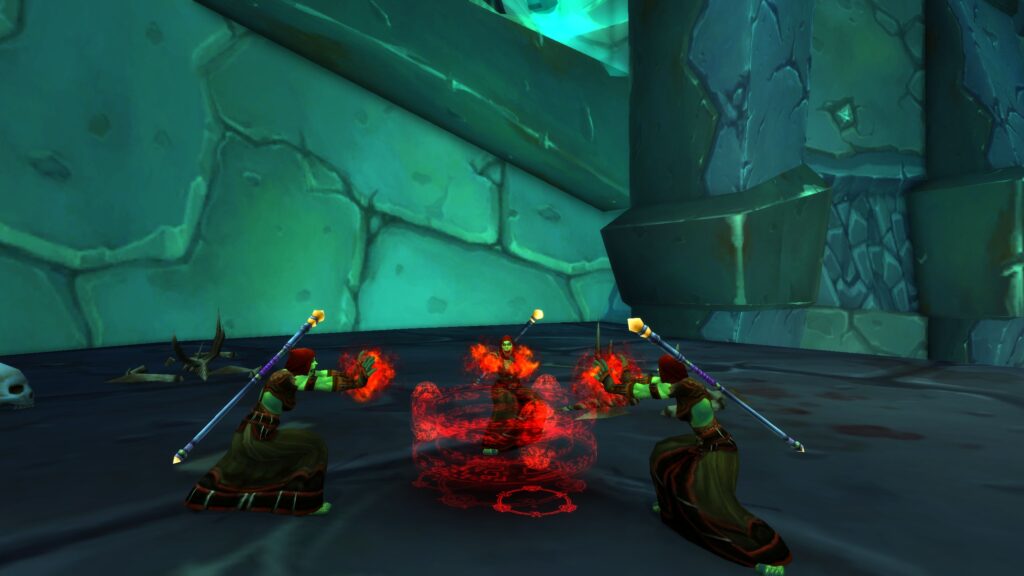
While 25-man raids can often feel chaotic and impersonal, 10-man raids offer a chance to truly enhance teamwork dynamics among players. With fewer people involved, team communication becomes much more effective. You’re not just another voice in a crowd; your input matters, being heard and considered in strategy planning.
Role assignment, too, is more precise in smaller groups. You’re not just a cog in the machine; you’re a critical component, your role directly impacting the team’s success. This leads to trust building, as each player relies on their teammates to fulfill their roles and responsibilities.
Conflict resolution plays a significant part, with each player’s voice holding weight, making it easier to address and resolve disagreements. You’ll find that the feedback loops in 10-man raids are more effective, as everyone’s input can be heard and processed, leading to rapid strategy adjustments.
All in all, 10-man raids foster a sense of unity and cooperation that’s often missing in larger raids. So, if you’re looking for a more intimate, teamwork-focused raiding experience, you might find yourself longing for the return of 10-man mythic raids.
Improved Raid Accessibility
Wondering why 10-man raids could be more appealing? It’s all about raid accessibility and player engagement. The smaller size of the raid team makes it easier for new players to understand the mechanics, and for veterans, it’s a welcome change of pace. You’ll find that the reduced team size fosters more cohesive group dynamics and encourages active participation from every member.
A comparison between 10-man and 20-man raids highlights the advantages:
| Aspect | 10-Man Raid | 20-Man Raid |
|---|---|---|
| Accessibility | High | Medium |
| Player Engagement | High | Can Vary |
You’re not just a number in a 10-man raid; you’re an essential part of the team. Your contributions greatly impact the team’s performance, making the raid more engaging. Additionally, managing a 10-man team is logistically less intimidating than a 20-man one, making it easier to organize and lead. The improved raid accessibility and enhanced player engagement are undeniable benefits of 10-man raiding, which is why many players are hoping WoW will bring back this format.
Drawbacks of 10-Man Raiding
Though 10-man raiding in WoW has its charms, it also presents several significant drawbacks. One of the most notable is the intense focus on individual skill. In a smaller raid group, each player’s performance is under severe scrutiny. You’re more visible, and any mistakes are painfully evident. You can’t hide behind the group; if you mess up, it’s immediately clear to everyone.
The pressure to perform can be stressful. It can cause friction within the group, with players blaming each other for failures. This tension can undermine the camaraderie that’s so essential to a successful raiding team. It’s not uncommon for 10-man raiding groups to experience more internal conflicts and drama than larger groups.
Another significant drawback is the encounter design. With fewer players, the design of encounters becomes more challenging. Balancing the difficulty to be challenging, yet not impossible, for a smaller group is a delicate task. It’s tough to create encounters that are equally challenging for all 10 players, without making them too easy or too hard.
Also, with fewer players, the margin for error is slimmer. If one player is knocked out, that’s 10% of your team gone. In larger raids, losing one player is less damaging. But in a 10-man raid, every loss can be a devastating blow.
In essence, the drawbacks of 10-man raiding revolve around the increased pressure on individual skill and the challenges of encounter design. It’s a high-stakes game with little room for error, making it an exciting but often stressful experience.
The Shift to 20-Man Raids
Now, let’s turn your attention to the shift in WoW’s raiding dynamics – the move from 10-man to 20-man raids. You might be wondering why this expansion happened and how it impacted the gameplay. While it certainly brought new challenges, it has also reshaped the player dynamics in significant ways.
Reasons for Raid Expansion
While there has been a significant shift to 20-Man Mythic Raids in World of Warcraft (WoW), it is essential to understand why this change occurred. The expansion to larger raid sizes was driven by a few key factors:
- Balancing Challenges: With a larger raid size, developers can create more complex and challenging encounters, keeping the game fresh and exciting.
- Player Engagement: Larger raids mean more opportunities for player engagement and collaboration, reinforcing WoW’s community-focused ethos.
- Inclusive Gameplay: A larger raid size allows more players to participate in end-game content, enhancing inclusivity.
- Progression Curve: With 20 players, the progression curve is smoother, avoiding the often abrupt difficulty spikes associated with smaller raids.
Impact on Player Dynamics
As you navigated the shift from 10-Man to 20-Man Mythic Raids, you likely noticed significant changes in player dynamics. The larger raid team meant an increase in social interaction, with more players to communicate and strategize with. It’s likely you found yourself developing new relationships and strengthening existing ones during the raid encounters.
However, this shift also affected player engagement. With more players involved, there was a greater challenge in keeping everyone engaged and accountable. You may have felt less individually important in a 20-Man raid, as your actions were just one part of a larger team. This could have potentially made you feel less engaged or motivated to perform at your best.
Additionally, the shift to larger raids likely changed the group’s dynamic, potentially leading to increased competition or conflict. As the raid size doubled, so did the number of personalities and playstyles to manage. This could have made it more challenging to maintain a cohesive, cooperative team.
Challenges in Larger Raids
Although the shift to 20-Man Mythic Raids provided a larger social environment, it came with its fair share of drawbacks. Stepping up the number of players required a significant increase in mechanical complexity and encounter design. The coordination issues that arose were numerous and often related to role distribution and player commitment.
In particular, you’ll face these challenges:
- The encounter tuning gets trickier with more people. More variables come into play, and the gear progression of each player becomes more critical.
- Communication barriers can grow with larger teams. It’s harder to guarantee everyone’s on the same page, causing some strategies to fall apart.
- Team cohesion can suffer as the group expands. When you’re dealing with 20 personalities, conflicts can arise, damaging group morale.
- Role distribution can become a headache. Balancing the number of healers, tanks, and damage dealers can become a logistical nightmare.
Managing these issues requires a dedicated and organized raid leader. Without one, even a group of the most committed players may struggle to overcome the sheer complexity of 20-Man Mythic Raids.
Community Response to the Change
Despite the potential for strategic complexity, the WoW community has expressed mixed feelings about the return of 10-Man Mythic Raiding. Community feedback has been diverse, with some players welcoming the change and others expressing concerns.
Many in the community are excited about the prospect, believing this could bring back a level of intimacy and coordination that larger raids can sometimes lack. They feel it could revive the old spirit of WoW, where camaraderie and team dynamics played a more prominent role. For these players, 10-Man Mythic Raiding represents a nostalgic, yet challenging, gameplay experience they’ve missed.
However, not all player opinions are positive. Some argue that 10-Man Mythic Raids could lead to more exclusivity, as guilds would have to be more selective about who they bring. This could foster a more competitive, and potentially toxic, environment within the game.
Others worry about the logistical challenges. Managing and coordinating a 10-man team can be just as complex, if not more so, than larger raids. With fewer players, each person’s role becomes more critical, and a single mistake could have larger consequences.
The community also raises concerns about the balancing issues that could arise. With a smaller team, tuning the difficulty of encounters to be challenging but fair could be a significant problem.
Analysis of Current Raiding Trends
While you’re contemplating the possible return of 10-Man Mythic Raiding, it’s worth examining current raiding trends in WoW. The game has seen a shift in its raiding structure over the years, with the focus seemingly moving towards larger, more complex raids. This has fundamentally changed the dynamics of player engagement and raid difficulty.
The following points provide a snapshot of current raiding trends:
- Increasing raid size: Current raids have grown in size, often requiring 20 or more players. This has made coordination more challenging, but also more rewarding when successful.
- Greater emphasis on difficulty: Raids have become more complex, with many bosses requiring intricate strategies to defeat. This has increased raid difficulty, pushing players to improve their skills and teamwork.
- More diverse player roles: There’s been an increase in the variety of roles that players can take on during raids. This has added another layer of complexity, but it’s also engaged players in new, exciting ways.
- Increased player engagement: Despite, or perhaps because of, the increasing challenges, player engagement seems to be at an all-time high. Players are investing more time and effort into preparing for and executing raids.
These trends indicate that WoW is currently favoring larger, more complex raids. It’s clear that while raid difficulty has increased, so too has player engagement. Whether or not this will lead to the return of 10-Man Mythic Raiding, however, remains to be seen.
Predictions for Future Raid Formats
Given the prevailing trends, you might wonder what raid formats could look like in the future. The answer isn’t simple, but we can make educated guesses based on what we understand about WoW’s raid design and player engagement strategies.
One prediction is that WoW might return to smaller raid formats. With the rise of online communication tools and the success of smaller-scale 5-man dungeons, WoW’s developers could see the significance in bringing back 10-man mythic raiding. Smaller raids would allow for more intimacy and cooperation among players and could rekindle a sense of camaraderie that larger raids often lack. It’s a move that could increase player engagement, especially among those who prefer a more close-knit gaming experience.
Alternatively, WoW might stick with larger raids but introduce more flexible options. This could include dynamic scaling, where the difficulty and rewards of a raid adjust based on the number and level of players involved. Dynamic scaling would allow for greater player inclusivity while maintaining the challenging nature of raids, an essential aspect of WoW’s raid design.
Finally, WoW could experiment with entirely new raid formats to keep things fresh. This might involve introducing new types of objectives, combat mechanics, or even narrative elements within raids. By shaking things up, WoW could maintain player engagement and guarantee that the raiding experience continues to evolve.
Regardless of what happens, it’s clear that the future of WoW raiding will depend heavily on player engagement and innovative raid design. Only time will tell what form that will take.
Frequently Asked Questions

How Does the Difficulty Level Vary Between 10-Man and 20-Man Raids?
In 20-man raids, you’ll find raid mechanics more complex and team dynamics harder to manage. There’s greater difficulty coordinating larger teams, making 20-man Mythic raids generally more challenging than their 10-man counterparts.
What Is the Ideal Team Composition for a 10-Man Mythic Raid?
For an ideal 10-man mythic raid, you’d typically want two tanks, three healers, and five damage dealers. Class synergy is essential, ensuring each role complements the others effectively boosts your team’s overall performance.
Is There Any Difference in Loot Drops Between 10-Man and 20-Man Raids?
Yes, there’s a difference. In 20-man raids, loot distribution is more generous, accelerating gear progression. You’ll find more opportunities for class-specific gear, making it a more efficient method for outfitting your character.
Do 10-Man Raids Require More Individual Skill Compared to 20-Man Raids?
Like juggling flaming torches, 10-man raids do demand more individual skill. You’re part of a smaller team, so your individual performance matters more. The group dynamics are also different, with a greater focus on coordination.
How Can Beginners Best Prepare for a 10-Man Mythic Raid?
As a beginner preparing for a 10-man mythic raid, you’ll need to focus on gear optimization and role understanding. It’s essential you’re well-equipped and understand your character’s role to contribute effectively to your team.
Conclusion
Like a raid team adjusting tactics to conquer a boss, WoW’s raid format may need to adapt to player feedback. While 20-man raids offer complexity and balance, the close-knit camaraderie of 10-man raids is missed by many. Could a hybrid model emerge, blending the best of both worlds? Only time, and Blizzard, will tell. But one thing’s for sure, the raiding community will continue to passionately voice their views on this ever-evolving game dynamic.